
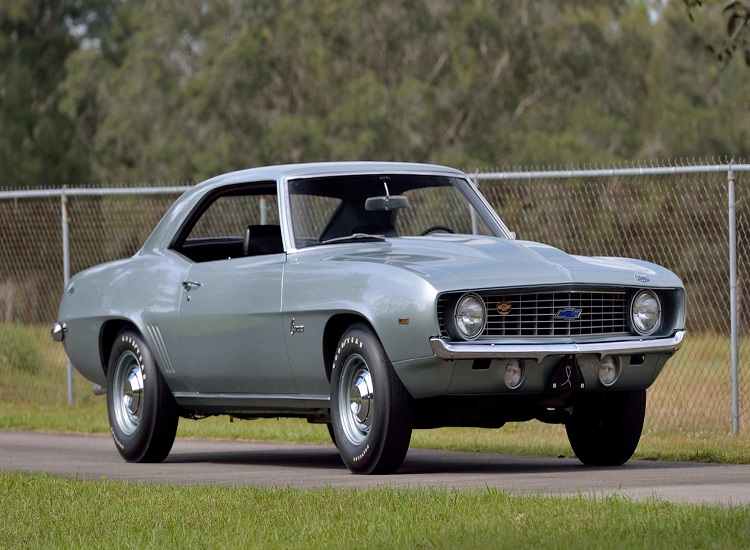
The iconic American classic cars of the 1970s represent the final and most dramatic chapter of the muscle car era. This decade delivered unmatched power, bold styling, and unforgettable performance before strict regulations changed the automotive industry forever.
Iconic American Classic Cars of the 1970s
The 1970s marked the grand finale of American muscle cars. At the start of the decade, manufacturers focused heavily on raw power and aggressive design. However, rising insurance costs and new emission laws slowly reduced performance. Even so, this era produced some of the most iconic American classic cars ever built.
Below are five legendary models that defined muscle car history and still attract collectors today.
Chevrolet Chevelle
After the massive success of the Impala, Chevrolet introduced the Chevelle to dominate the mid-size muscle segment. The company released it at the peak of the muscle car era, and buyers quickly embraced its performance.
The Chevelle SS came equipped with a massive 7.4-liter engine that produced up to 450 horsepower. It could accelerate from 0 to 100 km per hour in about six seconds. That level of speed impressed both racers and daily drivers.
Chevrolet marketed the Chevelle as America’s most popular mid-size car. Drivers praised its balance of comfort and power. However, changing fuel economy standards reduced demand. As a result, the Chevelle became a prized restoration vehicle rather than a showroom bestseller.
Today, collectors consider the Chevelle one of the fastest and most respected iconic American classic cars of its time.
Plymouth Superbird
The Plymouth Superbird took performance to a whole new level. Chrysler designed it to dominate NASCAR racing. Because of homologation rules, Plymouth had to sell the Superbird to the public as well.
The Superbird featured dramatic aerodynamic upgrades, including a massive rear wing and a pointed nose cone. Buyers could choose from several engines. Options included the 440 Super Commando, the 440 Six Barrel, or the legendary 426 Hemi.
With the Hemi engine, the Superbird reached 60 miles per hour in under five seconds. NASCAR legend Richard Petty returned to Plymouth and won eight races in the Superbird. That success cemented its place in racing and streetcar history. Few vehicles match the bold appearance and racing heritage of this American icon.
Buick GSX
Buick surprised everyone with the GSX. Built on the Skylark platform, the GSX combined luxury styling with extreme torque. General Motors approved the model so Buick could compete directly with rivals like the Pontiac Judge.
The Buick GSX produced an incredible 510 lb-ft of torque at just 2,800 rpm. It also delivered 350 horsepower. That torque figure exceeded every other American muscle car of the era.
Drivers loved the GSX for its smooth ride and explosive acceleration. Even today, it holds the title for the highest torque output among mass-produced American muscle cars. Because of limited production, original GSX models now command premium prices at auctions.
Plymouth Barracuda
The Plymouth Barracuda started quietly, but everything changed when Plymouth upgraded its engine options. The 7.2-liter engine produced 390 horsepower, while the 7.0-liter Hemi version pushed output to 425 horsepower.
Unlike earlier models, the Barracuda became a fully independent design. It no longer shared parts with economy cars. That transformation made muscle performance more accessible to a wider audience. Bright color options like Vitamin C, In Violet, and Sassy Grass Green made the Barracuda visually striking. It also performed well on the track. Famous drivers competed in Trans Am races using the Barracuda, proving its serious racing potential. This model helped redefine affordable performance in the muscle car era.
Pontiac Firebird
The Pontiac Firebird closed the muscle car chapter with style. Pontiac focused on sleek design and modern details. Its Endura rubber bumpers blended seamlessly into the body, giving the car a clean appearance.
As performance regulations tightened, Pontiac still managed to deliver excitement. The Firebird offered a 400 cubic inch engine producing 185 horsepower. While lower than earlier muscle cars, the performance still impressed critics.
Car and Driver named the Firebird one of the fastest cars of the year. Buyers responded quickly, making it one of the last strong performers before the muscle era ended.
Lasting Legacy of Muscle Cars
These vehicles remain more than machines. They represent freedom, power, and innovation. Enthusiasts continue to restore and showcase them at car shows worldwide.
If you enjoy learning about iconic American classic cars, explore our internal guides on classic muscle cars, vintage car restoration tips, and historic automotive brands. These resources offer deeper insight into America’s automotive golden age.
